How to create a note template
Create a template when you want notes to follow your practice’s own format. Choose the headings, add short instructions, and reuse the template for future notes.
Open Templates
A template gives each note a repeatable structure. Its headings organize the finished note, while descriptions tell Apollo what belongs in each section. Use the template’s overall instructions for preferences that apply throughout the document.
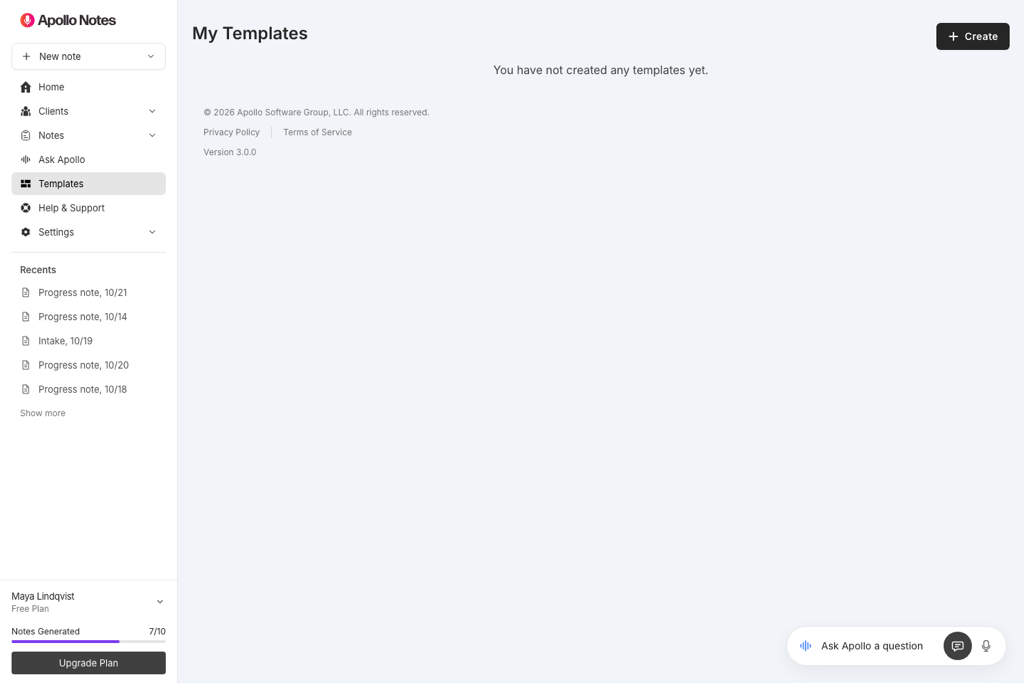
Select Templates in the sidebar. This page lists your templates and gives you options to create a note, edit a template, or delete one.
Create a template
Select Create and enter a clear name, such as “Group Therapy Note.” The name helps you find the template on Home and in Templates.
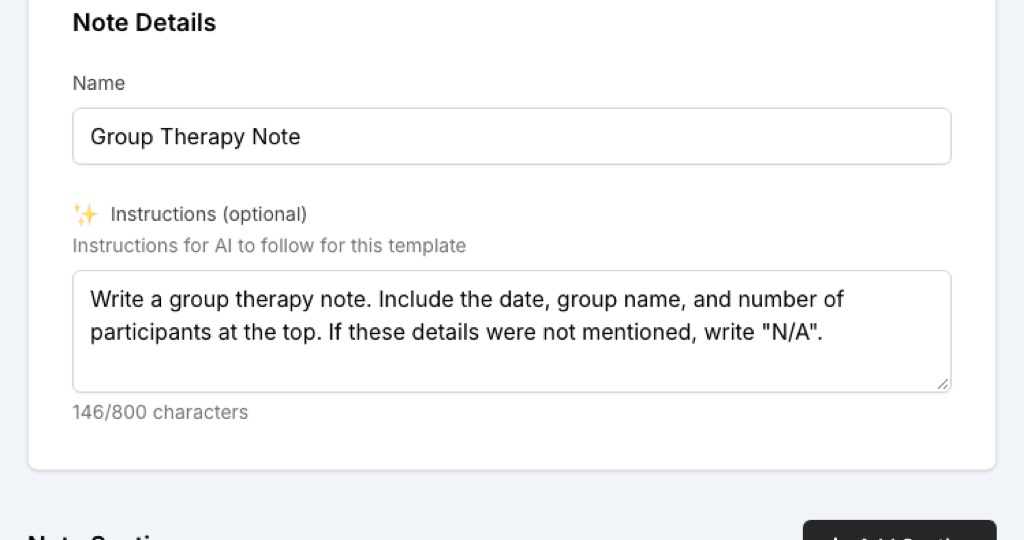
Add instructions
Use Instructions for guidance that applies to the whole note. Keep it short and specific. For example:
Tell Apollo what kind of document you want, who it is about, and which details matter. Keep whole-note instructions in Instructions, and put guidance for a single section in that section’s description.
“Write a concise group therapy note for one client. Include the session date, group focus, interventions, client response, and next steps.”
You can also tell Apollo how to handle a detail that you have not provided. For example: “Include the session date, group name, and number of participants at the top. If a detail was not provided, write N/A.” This gives Apollo a clear way to mark missing information rather than fill in a gap.
Keep instructions brief and consistent. A few clear directions are easier to follow than a long list of competing rules. Review each draft to confirm that the instructions were followed and the details match your source material.
Add sections
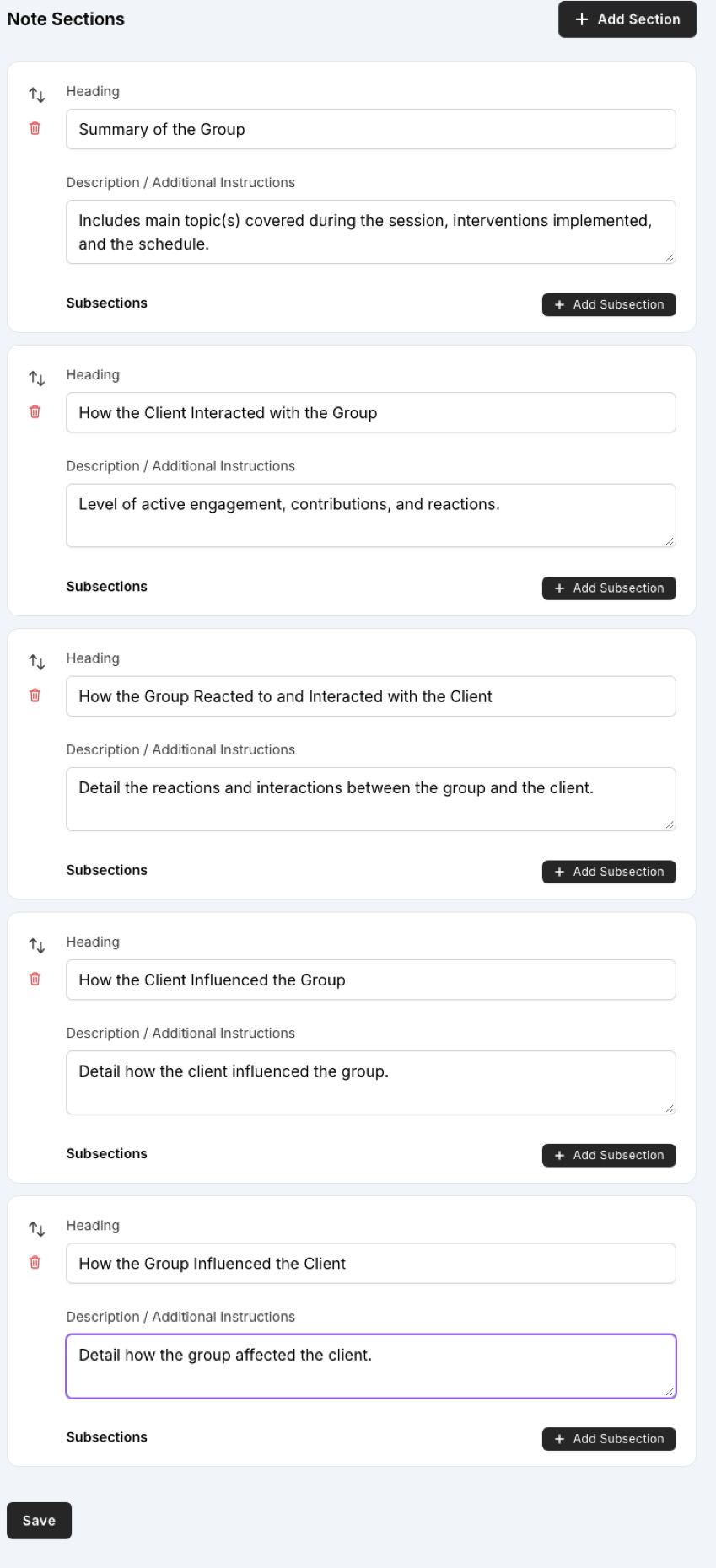
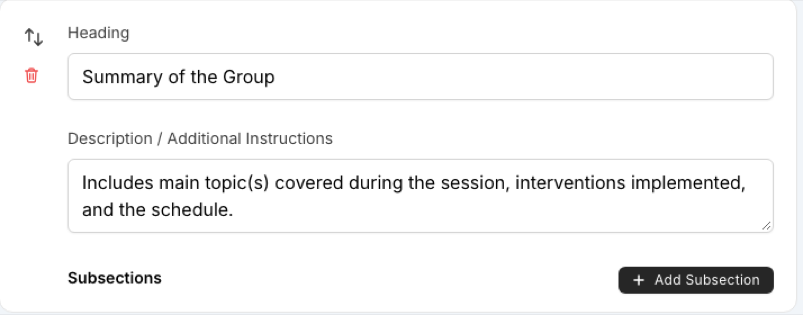
Select Add Section and enter a heading and a short description of what belongs there. Add subsections when you want separate fields within a section.
Session focus: the main topic and goals for the group.
Interventions: the approaches and activities used.
Client response: participation, feedback, and progress.
Plan: homework and next steps.
The heading is the title you want in the note, such as “Client response.” The description explains what to include, such as “Describe the client’s participation, response to interventions, and progress toward goals.” These prompts also help you cover the right details when dictating or typing your summary.
Use subsections when a main section needs separate fields. For example, a Plan section could have Homework and Next appointment subsections. Give each one a heading and short instructions.
Use the drag handle to reorder sections. Use the delete icon to remove a section or subsection. Select Save when the format is ready.
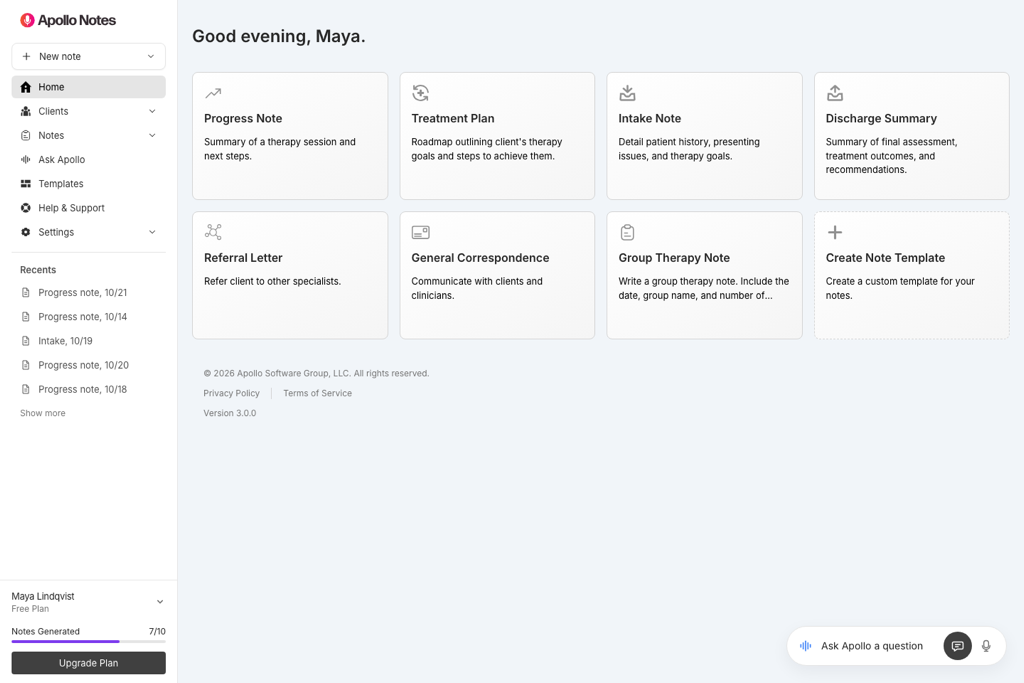
After saving, the template appears in Templates and as a tile on Home. You can return to Templates and select Edit to adjust its instructions or sections for future notes.
To try the template, choose its tile on Home or select + Note beside it in Templates. Create a sample note and check that the headings and instructions give you the format you want.
Try the template with a few sample summaries that cover different situations. Check the section order, the level of detail, and how missing information is handled. Adjust the descriptions or instructions if the draft needs clearer guidance.
Read the full templates guide.